
CRTA is a civil society organization dedicated to the development of democratic culture, democratic institutions, and the improvement of conditions for free and fair elections in Serbia. CRTA analyzes the work of state institutions, the role of the media and professional information in the democratization of society, and citizens’ attitudes and beliefs about social and political processes. Since 2016, CRTA has been observing elections at the local and national levels, with the help of thousands of citizens trained to the highest international standards for citizen election observation, advocating for the improvement of conditions for fair and free elections. CRTA conducts research based on whose findings it proposes solutions, based on the principles of the rule of law and respect for human rights. Additionally, CRTA informs and educates citizens about the state of democracy and their political rights, encouraging them to directly engage in addressing issues in their communities and in other political processes.
In 2018, CRTA received the Democracy Defender Award, awarded globally by the OSCE, for outstanding contributions to the promotion of democracy and the defense of human rights, and the international recognition of the W. Averell Harriman Democracy Award for innovations, dedication, and contribution to democracy awarded by the National Democratic Institute in 2013. CRTA also received the Commissioner for Information of Public Importance and Personal Data Protection Award for outstanding contributions to the field of citizens’ rights to access information of public importance in 2018. CRTA’s Director Vukosava Crnjanski received the recognition of the Knight of the National Order of Merit (chevalière de l’ordre national du Merite), awarded by the President of the Republic of France on January 19, 2023, upon the Embassy of France nomination, for persistent and courageous efforts in strengthening democracy and promoting an accountable and transparent public debate in Serbia through the years. In addition, CRTA received the Jelena Šantić Foundation Award in 2024, an award given for outstanding contribution in the fight for the democratization of society, justice and human rights.
CRTA’s online fact-checking media Istinomer (Eng. Truth-o-Meter) is a verified signatory of the IFCN Code of Principles and a verified member of the European Fact-Checking Standards Network. Since 2020, Istinomer has been Meta’s exclusive local partner for Serbia in combating disinformation on Facebook and Instagram.
The team
By the end of 2025, the CRTA team consisted of over 90 individuals distributed across thematic program departments for elections, quantitative and qualitative research, legal analytics, media monitoring, support for formal and informal activist initiatives, communications, media and field campaigns, finances, administration and IT. Under the auspices of CRTA, the Open Parliament operates, an initiative for a more transparent and quality work of the Parliament as a key democratic institution in the parliamentary democracy system, and Istinomer, the first online fact-checking media outlet in the Western Balkans region.
The organization is led by Director Vukosava Crnjanski and Program Director Raša Nedeljkov.
CRTA Board of Directors consists of Rastko Petaković, lawyer (Chairman of the Board), Olivera Medar, university professor, Svetlana Logar, retired university professor, Tamara Skrozza, journalist, Hajrija Bugujevci, public finance expert, Dušan Spasojević, university professor, and Ilija Vojnović, program director of the International Republican Institute, Turkey.

REFLECTIONS ON 2025: WHAT DEFINED THE YEAR?

Vukosava Crnjanski, Director:
TRUST CANNOT BE RESTORED WITHOUT REAL DEMOCRATIC CHANGE
The depth of Serbia’s crisis in 2025 cannot be addressed through technical fixes or cosmetic reforms. The year confirmed what citizens have long felt: distrust in institutions and elections is not episodic; it is structural, built on years of abuse of power, manipulation of democratic safeguards and the absence of accountability. At the same time, sustained civic mobilisation, especially among younger generations, showed that democratic renewal remains a real social demand. People are not asking for new procedures alone, but for institutions that act credibly, protect rights and serve the public interest. Restoring trust requires political responsibility and measurable change, not declarations, not dialogue without consequences, and not reforms on paper. It requires institutions that can no longer be captured, and elections that citizens can believe in again.

Raša Nedeljkov, Program Director:
DEMOCRACY CANNOT FUNCTION WITHOUT ACCOUNTABILITY AND FREE PARTICIPATION
The developments of 2025 further confirmed that elections alone cannot sustain democracy when accountability mechanisms are systematically weakened. Persistent pressure on citizens, media capture and the narrowing of civic space undermined the conditions for meaningful political participation, turning democratic procedures into formal exercises without substance. Yet, the scale and persistence of civic mobilization showed that citizens continue to recognize democratic participation as essential and are increasingly unwilling to accept repression, intimidation and the normalization of democratic erosion as inevitable.

Pavle Dimitrijević, Director of Legal Affairs:
WHEN THE RULE OF LAW IS WEAKENED, CITIZENS ARE LEFT UNPROTECTED
In a year marked by repression and institutional pressure, the gap between formal legal frameworks and their implementation became increasingly visible in its impact on citizens’ security and dignity. Despite the existence of laws and international recommendations, selective enforcement and institutional inaction left many citizens exposed to abuse, police violence and arbitrary treatment, reinforcing the perception that power often prevails over the rule of law. Nonetheless, citizens’ willingness to report violations and seek legal remedies demonstrated that the demand for legal protection and accountability remains strong, even under conditions of growing repression.

Vojislav Mihailović, Director of Public Opinion Research:
TRUST IN DEMOCRACY DEPENDS ON MORE THAN INSTITUTIONS - IT DEPENDS ON LIVED EXPERIENCE
“Elections are getting worse from election cycle to election cycle, and on the other hand, as citizens, we have no choice but to go out and vote, because that is the Public opinion data revealed that many voters, including a significant share of those aligned with the ruling party, saw elections not simply as procedural milestones but as potential opportunities for Serbia to emerge from crisis, and expressed support for protest movements as legitimate civic responses to systemic problems. The persistence of optimism among broad segments of the population, even amid frustration with institutions, suggested that democratic aspirations remain deeply rooted, pointing to a dynamic in which citizens continue to engage with democratic processes because they believe participation matters.


Milena Popović, Istinomer Editor in Chief:
PERSISTENT MANIPULATION HIGHLIGHTS THE IMPORTANCE OF VERIFIED INFORMATION
Public debate and civic action continue to be shaped not only by events, but by how information about those events is produced, framed and contested. Throughout the year, patterns of manipulation, misleading narratives and attempts to divert attention from core issues revealed how vulnerable the information space remains to spin and distortion. However, widespread citizen engagement with verified content, including fact-checks, analytic context and transparent documentation of manipulative tactics, showed that access to reliable information is essential not only for understanding political developments, but for sustaining democratic accountability and resisting the normalization of disinformation.
Vladimir Erceg, Program Manager:
DEMOCRATIC NORMAS ERODE WHEN INSTITUTIONS ARE DEGRADED AND POLITICAL PRESSURE ESCALATES
The experience of 2025 showed that democratic erosion is not only about the quality of elections, but also about the gradual weakening of core institutions and the growing tendency to treat institutional procedures as a mere formality. Rising political pressure, manipulative control over fundamental electoral tools such as the voter register, and the collapse of parliamentary norms and practices pointed to a broader pattern: institutional legitimacy was steadily undermined even while formal processes continued. At the same time, increased public attention to democratic accountability and widespread criticism of institutional capture showed that citizens’ expectations remain resilient, even as established procedures come under mounting strain.
In focus: Defending democracy in a year of crisis
In 2025, CRTA operated in an environment defined by prolonged political and social crisis, mass citizen mobilization, heightened repression and a visible deterioration of democratic safeguards. Year-long, student-led protests against corruption and systemic accountability failures, coupled with intensified pressure on civil society and increased political violence, created conditions in which democratic norms were openly challenged and civic space significantly narrowed. In this context, CRTA focused on defending democratic standards in practice, advocating for institutional accountability, and supporting citizens who continued to demand transparent and accountable governance.
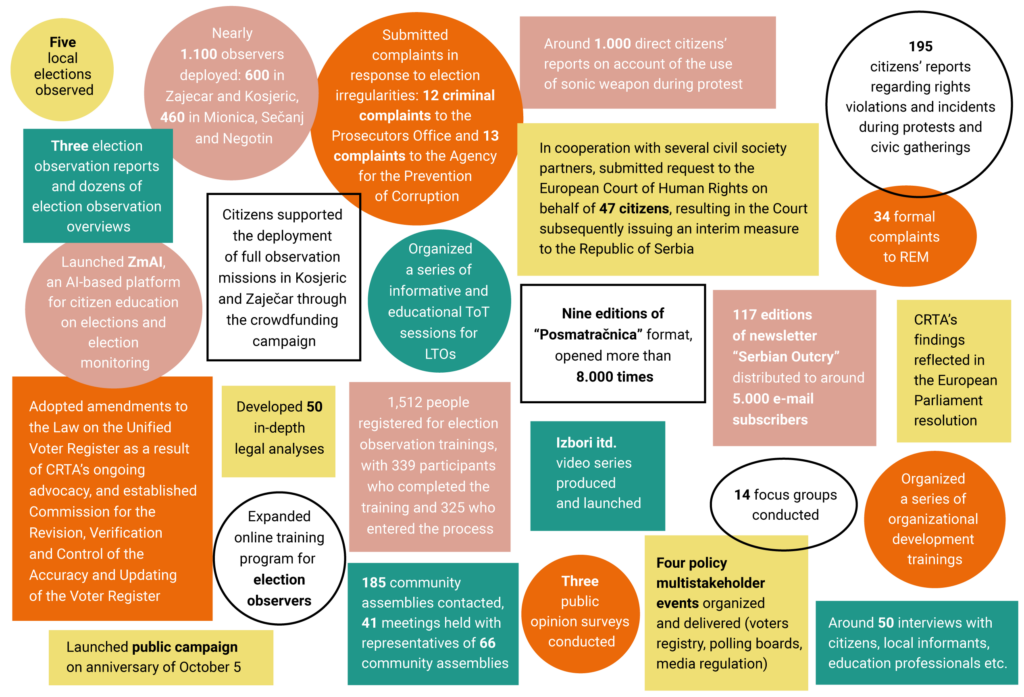
Throughout the year, CRTA was at the center of efforts to protect electoral integrity and expose the erosion of democratic procedures. The organization monitored five local election processes through long-term observation and election-day field monitoring, documenting entrenched patterns of voter pressure, misuse of public resources, intimidation and election-related violence. A major milestone was the first citizen-funded election observation mission in Serbia: in just five days, citizens’ donations enabled the launch of a full-scale observation of elections in Kosjerić and Zaječar, covering all polling stations. This unprecedented act of public support underscored both the urgency of independent oversight and the level of trust citizens placed in CRTA’s role in safeguarding elections. In parallel, CRTA’s expert proposals and advocacy kept electoral reform, particularly the integrity of the Unified Voter Register, high on the political agenda during a highly politicized process.
Beyond elections, CRTA played a critical role in defending citizens’ rights and supporting civic resilience amid intensified repression. As protests spread and pressure on civil society escalated, CRTA significantly expanded legal aid and advocacy, assisting citizens facing unlawful detention, police abuse and restrictions on freedom of assembly. Through rapid legal responses, strategic litigation and engagement with international legal mechanisms, CRTA helped translate citizen experiences into formal accountability processes. At the local level, CRTA worked closely with community assemblies and active citizens, combining outreach, training and practical education to strengthen preparedness for electoral abuses and institutional manipulation, and to sustain civic engagement under increasingly restrictive conditions.
CRTA also continued to provide the broader public with a clear and evidence-based picture of political realities in Serbia. Through systematic media monitoring and fact-checking, the organization exposed dominant narratives, propaganda patterns and the normalization of disinformation, most notably persistent anti-Western messaging in influential media outlets. Istinomer’s daily fact-checking, analytical content and thematic investigations reached large audiences and remained a key tool for countering manipulation in the public space. Research into citizens’ attitudes toward protests, institutions and political alternatives further informed public debate and international understanding of democratic trends in Serbia.
Institutional accountability also remained in focus. Through the Open Parliament initiative, CRTA continued to monitor the work of the National Assembly, provide public access to parliamentary data and document procedural abuses. These efforts culminated in a comprehensive constitutional initiative challenging the practice of adopting large numbers of laws in a single parliamentary session, reinforcing demands for transparency, accountability and respect for democratic procedure.
At the same time, CRTA strengthened its public outreach and international engagement. Through campaigns, public discussions and innovative communication formats, CRTA translated complex political and institutional issues into accessible content connected to citizens’ everyday experiences. Internationally, CRTA served as a key source of evidence-based assessments for democratic stakeholders, contributing to the European Commission’s 2025 Annual Report on Serbia and informing wider international scrutiny, including references to CRTA’s findings in a European Parliament resolution. The launch of EUCRTA in Brussels marked an important step in ensuring that verified data and field-based insights from Serbia are consistently represented in EU-level discussions on democracy, electoral integrity, media freedom and the rule of law.
In a year marked by democratic backsliding and growing repression, CRTA combined monitoring, protection, research and civic engagement into a coherent response aimed at sustaining democratic oversight and citizen participation. By standing alongside citizens and civil society actors, while maintaining sustained accountability pressure on institutions, CRTA continued to play a central role in defending democratic standards and the public interest in Serbia.
In 2025, CRTA’s Election Observation Mission monitored five local elections, combining field observation with long-term observation and advocacy for improved electoral conditions.
A key milestone this year was the successful implementation of a crowdfunding campaign that, for the first time in Serbian history, secured citizen funding for full election observation missions in Kosjerić and Zaječar in June 2025.
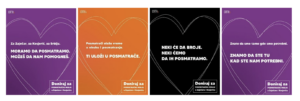
In just five days, citizens donated the required resources that covered costs related to observers’ travel, lunch packages, accommodation for participants traveling from different parts of Serbia, printing of materials and communication (mobile phones, call center, etc.).

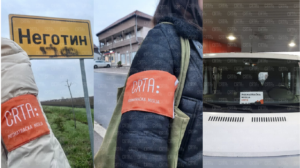
For the local elections in Zaječar and Kosjerić, CRTA mobilized, educated and deployed more than 600 election observers who covered all polling stations in these municipalities. In the autumn election cycle, 460 observers were accredited for the local elections in Mionica, Sečanj and Negotin, with Mionica being covered through a full-scale observation mission at all polling stations. The findings from these missions, including the long-term observation findings, were systematically presented through pre-election and election-day reports, highlighting increasingly widespread practices that point to electoral manipulations, abuses and growing criminalization of the electoral process.
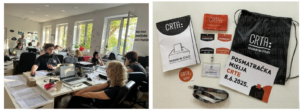
In response to detected electoral breaches in local elections, CRTA filed a total of 12 criminal complaints to the Prosecutors Office, as well as 13 complaints to the Agency for the Prevention of Corruption.
CRTA’s final assessment indicated the elections in Zaječar and Kosjerić were held in highly unfair and undemocratic conditions, with the atmosphere on election day resembling a state of siege. The process confirmed that, despite declarative commitments to implementing ODIHR recommendations, the authorities in practice create conditions that undermine the free expression of the voters’ will. In Mionica, CRTA was forced, for the third time since 2016, to withdraw its observation mission after two of its observers were physically attacked. Overall, the prevailing atmosphere of intimidation, fear and institutional tolerance of violence seriously compromised the integrity of the elections and public confidence in democratic procedures.
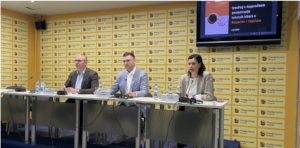
CRTA’s research and field work were complemented by strong advocacy efforts, geared towards domestic and international stakeholders. Pre-election and post-election reports pointed to the shortcomings in the electoral framework, unequal campaign conditions and various forms of pressure on voters. These reports served as key tools for engaging decision-makers, international partners and the wider public in discussions on the need for meaningful electoral reforms, focusing on the importance of implementation.
Legal aid mechanisms were significantly expanded and strengthened in 2025 to better support citizens seeking to protect their electoral rights, including through the provision of immediate legal aid by legal spot teams in the municipalities where elections were being held. Through legal counseling and assistance, CRTA helped voters report irregularities and make use of institutional channels for safeguarding electoral integrity, reinforcing citizen trust and participation in the electoral process.
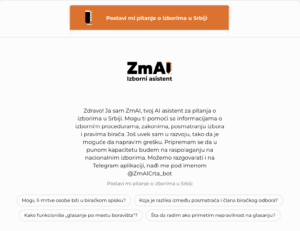
Throughout the year, CRTA continued developing and expanding the use of ZmAI, an AI-based platform designed to support election monitoring and contribute to civic education on elections. Improvements focused on refining the platform’s functionality and accuracy, enabling more efficient processing of large volumes of election-related data (including law and legal mechanisms) and public information. In addition, CRTA invested in enhancing its electoral education tools by producing new educational videos and expanding online training modules. These materials, hosted on CRTA’s learning platform for election observers, were aimed at improving observers’ understanding of electoral procedures, their roles, responsibilities and rights.
CRTA also played an important role in electoral advocacy throughout the process that led to the adoption of amendments to the Law on the Unified Voter Register on 7 November 2025. Through continued public engagement, expert analysis, and communication with domestic and international stakeholders, CRTA contributed to prioritizing electoral reform, namely the integrity of the voter register, high on the reform agenda during a long and highly politicized process largely driven by international pressure. Most importantly, CRTA put forward two draft versions of the proposed amendments in public, with the second version emerging from broad consultations and discussions with academia, students, civil society organizations, independent experts and political parties. As a future member of the Commission for the Revision, Verification and Control of the Accuracy and Updating of the Voter Register, CRTA will monitor the Commission’s work, advocate for strict democratic and legal standards, and inform the public transparently, while continuing to warn that the adopted amendments remain a limited political compromise and are unlikely to restore trust or ensure a reliable voter register before the next elections.
Research
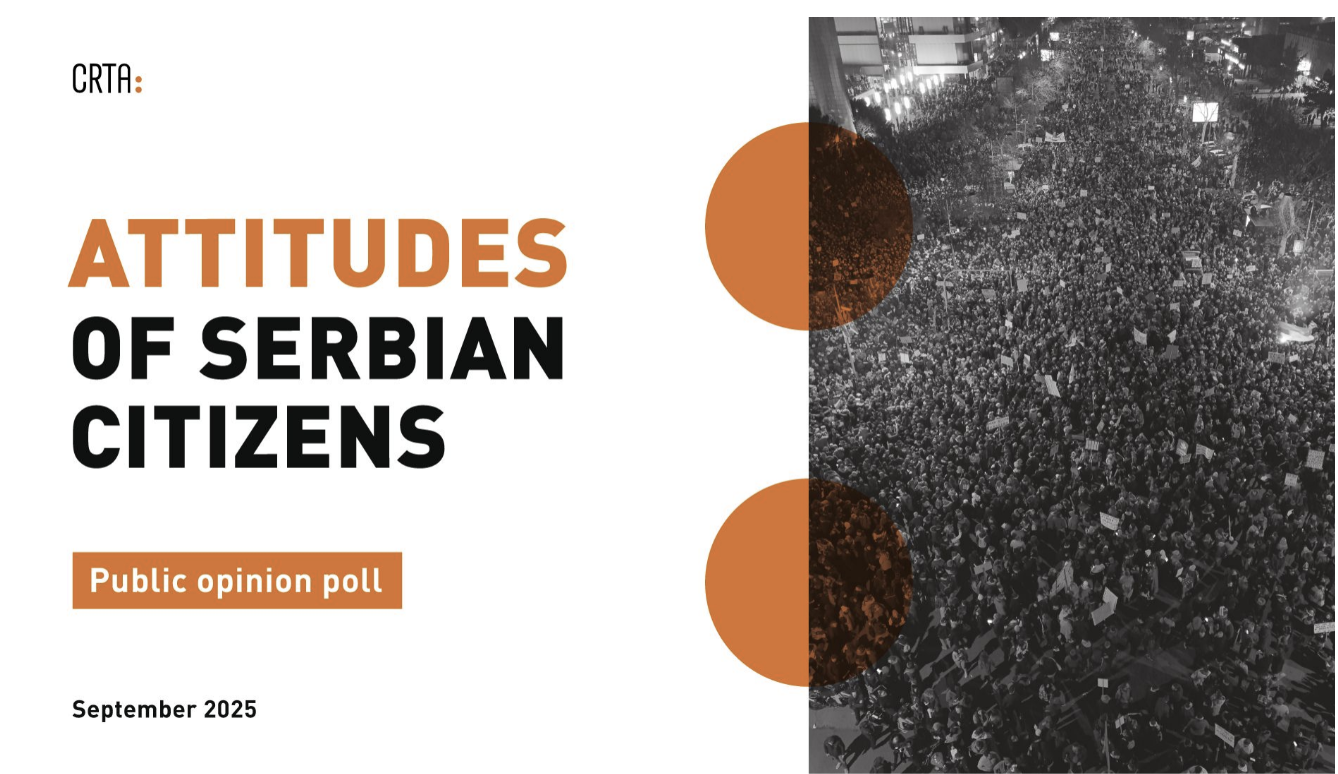
In 2025, CRTA conducted three public opinion surveys, tracking the new political developments and the political impact of student protests. The February survey found broad and growing support to student initiatives, with around 80% backing most student demands and roughly one third of citizens reporting participation in protests. The April survey showed that support for the protests and students remained high even after five months, standing at 59%. The September survey assessed that nearly two thirds of citizens saw snap elections as a way out of the crisis, including almost one in three voters of ruling parties, and suggested a referendum-like polarization, with a student-backed list at 44% versus 32% for the bloc led by President Aleksandar Vučić.
In addition, CRTA conducted several qualitative studies throughout 2025 focusing on pressures, protests and civic engagement. One key study, “Education Under Pressure: An Analysis of Cases of Dismissals and Non-Renewal of Contracts”, was based on 24 in-depth interviews with education professionals from 11 municipalities and carried out between September and October 2025. This research was complemented by CRTA’s long-term qualitative election observation, which included the publication of more than 20 interviews with citizens and key informants. CRTA carried out additional qualitative research based on discourse analysis of public narratives, as well as desk-based analyses of political elites, combining content and discourse analysis with descriptive statistics.
CRTA also organized a series of focus groups during the year. In January 2025, three citizen focus groups explored perceptions of the student protests among both supporters and opponents. In April, four focus groups examined views on protests, social change, and key political actors. In July, four focus groups with active citizens from local assemblies and informal initiatives focused on civic engagement, cooperation with civil society organizations and expectations toward CSOs. Ahead of the November local elections, three focus groups were held in Negotin, Mionica and Sečanj, including local residents and election observers, to assess expectations, perceived importance and anticipated outcomes of the elections.
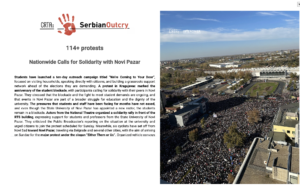
CRTA’s team also systematically tracked and documented protests and community assemblies held across the country, with the aim of mapping their scope, frequency and geographic spread, as well as better understanding patterns of civic mobilization and public participation. The findings were promoted through the newsletter “Serbian Outcry”, in 177 dedicated editions distributed to more than 400 email subscribers during 2025. The Serbian-language edition of the newsletter was distributed to over 4,600 email subscribers. CRTA continued to keep the public informed about the protests as they unfolded in real time, sharing timely photo and video updates, including aerial footage
In addition, CRTA launched a new format aimed at strengthening community-building and outreach through Posmatračnica, a dedicated channel for its observer network. In 2025, nine editions have been published and opened more than 8,000 times, indicating strong engagement and interest among CRTA’s network of observers.
Posmatračnica is designed to connect and highlight members of CRTA’s observer community, underscoring their collective strength, and serving to inspire and motivate observers. Through this format, CRTA periodically shares compelling stories and profiles from within its observer network. The content is intended exclusively for CRTA observers and also invites active participation, encouraging readers to suggest topics or contribute to content creation.

Legal advocacy, analysis and citizen support
Throughout 2025, CRTA’s legal team played a central role in advocacy and legal protection efforts, particularly in response to intensified repression during the summer, most notably in relation to outbursts of repression, violence and police brutality in August. The team initiated and supported constitutional complaints, engaged with international legal mechanisms including cases related to the use of a sound cannon before the European Court of Human Rights and worked extensively on proposals related to the Unified Voter Register (UVR). These efforts were supported by numerous legal analyses aimed at strengthening accountability and protecting fundamental rights.
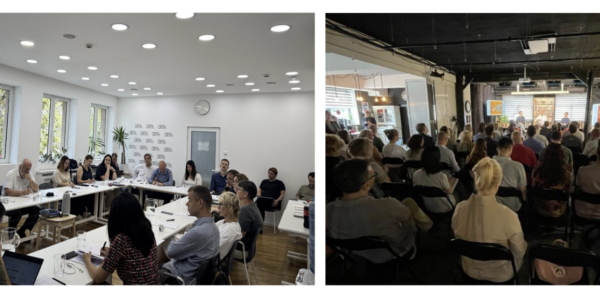
Within the conference, CRTA organized several side events in the form of community events, in order to engage non-traditional actors in electoral reform discussions. The first event, “Networks, influences, likes: In effect, do we elect?”, which was held in the “The House of Female Artists” space, was dedicated to the
In relation to electoral reform, the solution proposed in CRTA’s model aims to establish a solid foundation for restoring public trust in the UVR through a process that is inclusive, transparent and expert-led. CRTA’s model was developed in line with ODIHR recommendations and draws directly on the concerns and audit-related guidance consistently raised in ODIHR election observation mission reports. Since 2012, ODIHR election observation mission reports have recorded growing concerns about public confidence in the voters’ register, culminating in repeated recommendations for a comprehensive and inclusive audit, an approach that places trust as a central value that must shape the design of the audit process. In its reports, ODIHR consistently reiterated the need for such an audit “with the participation of relevant stakeholders, including political parties and civil society organizations”.
During 2025, CRTA’s legal team produced around 50 in-depth legal analyses covering a wide range of topics. These included the reform of the voter register, recommendations for improving the work of polling boards, assessments of the performance of election administration bodies, analyses of the conduct of prosecutors and courts, conclusions regarding the work of the media regulator and the public broadcaster, reviews of comparative electoral law practices. Additional analyses addressed proposed and adopted laws and bylaws, key administrative law issues, labor law concerns, media regulation and other topics of significant public interest.
Beyond producing legal analyses, CRTA also convened a series of consultations and working discussions with relevant stakeholders, including members of the expert community, civil society organizations, representatives of community assemblies and political parties, to test legal solutions, build informed consensus around reform priorities, and strengthen the legitimacy and feasibility of proposed measures in relation to the Unified Voter Register.
Citizen reporting remained a key component of CRTA’s legal work, including the allegations of the use of a sonic weapon (“sound cannon”). Around 1,000 citizens contacted CRTA directly with reports, which helped trigger a broader evidence-gathering effort following the 15 March protest. In this regard, CRTA coordinated the collection and legal use of approximately 4,000 citizen testimonies and commissioned an independent forensic analysis, transforming dispersed allegations into structured, legally actionable evidence. In cooperation with civil society partners, CRTA supported victims in domestic proceedings and provided legal assistance that contributed to an application before the European Court of Human Rights. The Court subsequently issued an interim measure ordering the Republic of Serbia, until further notice, to refrain from using sonic devices to
control assembled citizens. The request was submitted on behalf of 47 citizens by the Belgrade Centre for Human Rights, CRTA, the Lawyers’ Committee for Human Rights (YUCOM), the A11 Initiative, Civic Initiatives and FemPlatz.
Beyond the “sound cannon” case, CRTA also received and processed 195 additional citizen reports related to other rights violations and incidents during protests and public gatherings.
In parallel, CRTA submitted 34 formal complaints to the Regulatory Authority for Electronic Media (REM) concerning media malpractices, including violations of professional standards and biased or misleading coverage.

In 2025, Open Parliament continued to serve as a key platform for transparency, accountability and public insight into the work of the National Assembly of Serbia, providing comprehensive and timely parliamentary data and analysis.
During this period, Open Parliament published data from 40 plenary transcripts, 206 committee sessions and 14 public hearings, while also tracking 179 adopted laws, 25 draft laws still awaiting debate and nine confirmed MP mandates.
To make parliamentary work more accessible, the Open Parliament released 44 editions of the Parliamentary Playbook and 44 issues of the Parliamentary Weekly newsletters, providing regular overviews of parliamentary performance, legislative practices and broader institutional trends.
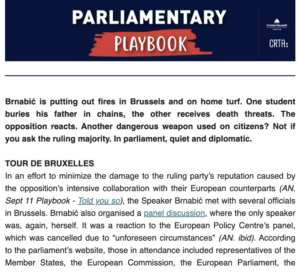
Beyond monitoring and reporting, Open Parliament’s data directly supported strategic legal and advocacy efforts. In February, CRTA used Open Parliament data to submit the initiative before the Constitutional Court challenging the constitutionality of 54 laws adopted during a single parliamentary session. The initiative spans 1,627 pages and represents one of the most comprehensive legal challenges to parliamentary legislative practices to date.
Open Parliament also contributed to a number of in-depth policy and analytical documents, including the Discussion Paper on 30 Essential Recommendations for Parliamentary Integrity in Serbia, CRTA’s contribution to the European Commission’s 2025 Annual Report on Serbia and the Annual State of Play Report on the XIV Convocation of the National Assembly.
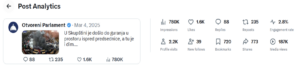
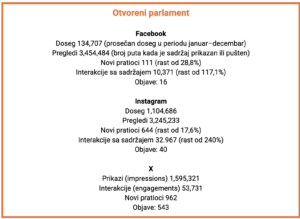
The Open Parliament platform’s public reach also expanded significantly, while its social media performance grew strongly across channels. In March, Open Parliament recorded its highest-performing X post to date, reaching 779,600 impressions, demonstrating heightened public attention to parliamentary transparency and accountability.

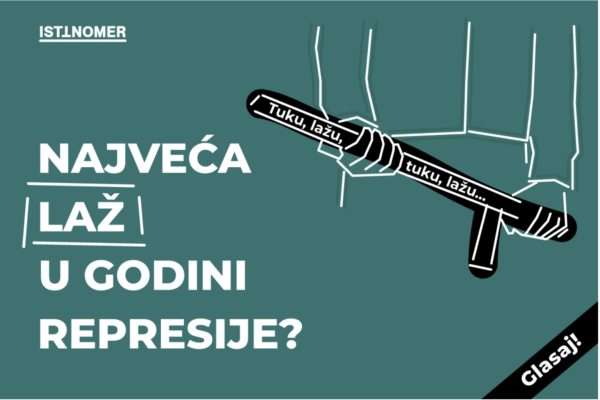
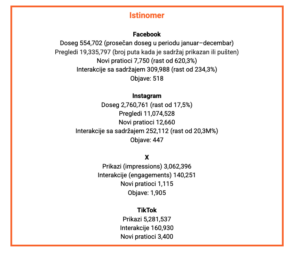
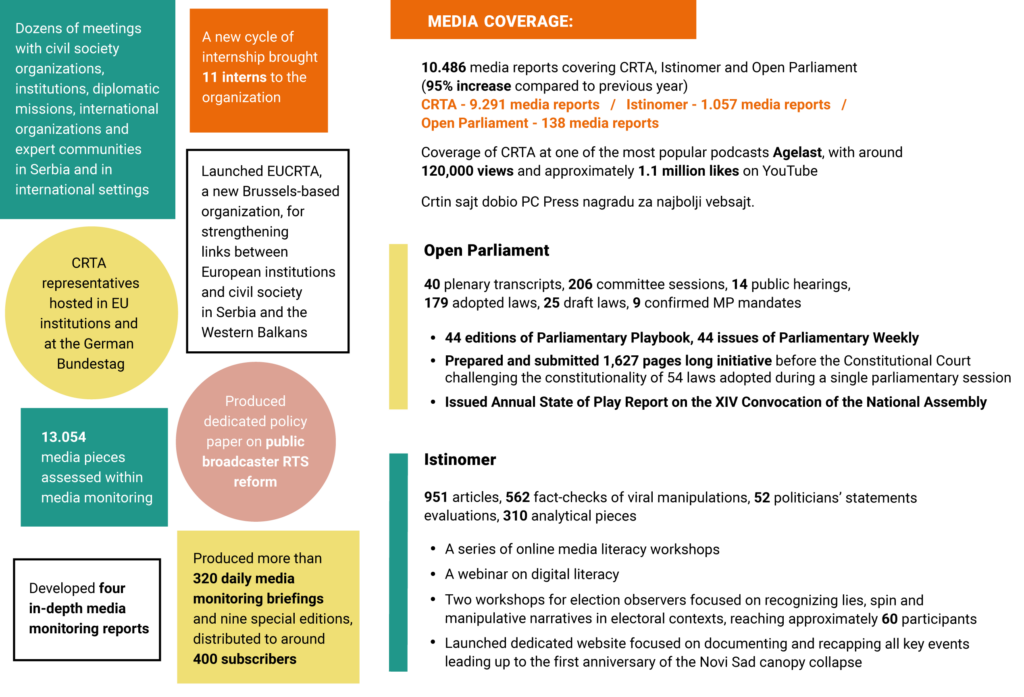
Throughout the year, CRTA’s media Istinomer continued to play a central role in fact-checking and spin-checking public discourse, focusing on political statements, viral misinformation and in-depth analytical content. In 2025, Istinomer published a total of 951 articles, including 562 fact-checks of viral manipulations, 52 evaluations of statements made by political actors and 310 analytical pieces that provided broader context and deeper insight into key political and social issues. In December, Istinomer launched the yearly contest for the “Lie of the Year”.
Marking its 16th anniversary, Istinomer held a series of online educational activities to strengthen media literacy and counter disinformation among journalists, students, activists and election observers. The program included a practical webinar on digital literacy and identifying manipulation and AI-generated content, as well as two workshops for election observers focused on recognizing lies, spin and manipulative narratives in electoral contexts, reaching approximately 60 participants.
Istinomer’s audience engagement remained strong, with the website attracting 1.4 million visitors and generating 1.6 million page views in 2025. Among the most-read content was the analysis “We are opening Kuzmin-Sremska Rača highway at the end of 2025, at the beginning of 2026 at the latest”, which achieved 16.5 thousand reads. The most-read fact-check of a viral manipulation was “No, Laura Koveši is not coming to Serbia to investigate vaccines”, achieving 18.1 thousand reads.
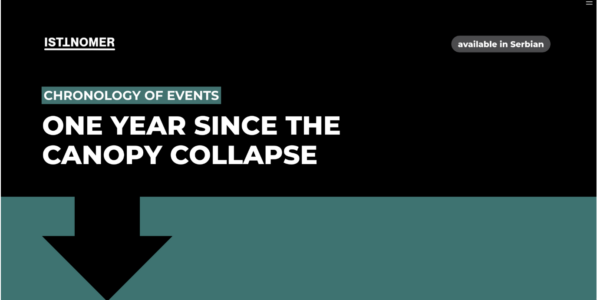
In addition, Istinomer launched a dedicated website focused on documenting and recapping all key events leading up to the first anniversary of the Novi Sad canopy collapse. The platform systematically compiled timelines, verified facts, official statements, institutional responses and media narratives related to the tragedy, providing the public with a clear and reliable overview of developments over time. By bringing together dispersed information in one accessible place, the site aimed to counter misinformation and support accountability by enabling citizens, journalists and researchers to better understand the broader social and political context surrounding the event itself and the events succeeding the tragic event in Novi Sad.
Recognizing that debunking is often insufficient once the harm caused by disinformation and manipulation has already occurred, the European Fact-Checking Standards Network (EFCSN) launched an initiative to act earlier, before disinformation outbreaks, by focusing more systematically on prebunking. As a member of EFCSN, Istinomer was tasked with developing a methodology for mapping and dismantling manipulative claims and narratives across formats, including text, infographics and video, for the entire network. This methodology consolidates existing approaches in the field and provides a unified, long-term foundation for fact-checkers across Europe, adaptable to different local contexts. Production of prebunking content based on this framework has already begun and will be further intensified in the coming period.
The year also saw meaningful cross-border cooperation with colleagues from Demagog (Slovakia) and FactCheck (Georgia), focusing on the mapping and analysis of shared manipulative narratives used by governments during protests in all three countries. Despite differing local contexts, ruling parties in Georgia, Slovakia and Serbia relied on strikingly similar rhetorical tactics to discredit protesters, delegitimize criticism and consolidate power, most frequently by framing protests as foreign-instigated attempts at a “color revolution”. While not a new strategy, this narrative resurfaced with renewed intensity amid political crises, revealing a common authoritarian playbook across the region.
Media monitoring
In 2025, CRTA’s media monitoring team carried out systematic, evidence-based monitoring of the most influential broadcast news formats in Serbia, focusing on central news programs and morning shows on RTS 1, TV Pink, TV Prva and TV Happy. The monitoring covered a wide thematic range, including politics, the military, the economy, Kosovo, the wars of the 1990–1999 period, culture, human rights and healthcare, allowing CRTA to identify recurring narratives and patterns across issues that shape public opinion. The unit of analysis was a single mention of a country within a media item (focusing on portrayal of U.S., EU, NATO, Russia, China), enabling consistent comparison of how international actors were framed and discussed.
This work resulted in a substantial body of analyzed content, with 13,054 media pieces coded and assessed during the monitoring period. Findings were consistently translated into products designed for rapid stakeholder use, including more than 320 daily briefings and nine special editions distributed to approximately 400 email subscribers, as well as four more in-depth media monitoring reports. These outputs provided timely snapshots of media coverage, enabling international stakeholders, journalists, civil society actors, analysts, and decision-makers to track shifts in narratives, dominant frames, and patterns of manipulation. At the same time, the accumulated data set supports deeper analysis and long-term comparisons across monitoring periods and with other relevant data sources.
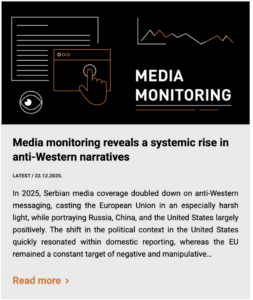
Media monitoring data revealed that Serbian media continued to promote anti-Western narratives in a systematic and consistent manner. The volume of negative content has not declined even after 2022, suggesting that anti-Western messaging has become a normalized and lasting feature of the media ecosystem. Following the U.S. presidential election and Donald Trump’s return to the presidency, negative framing has been redirected primarily toward the European Union, while criticism of the United States has softened, making the EU the central target of negative coverage.
Compared to the previous year, negative manipulations targeting the EU have increased significantly, while positive narratives about the United States have become more frequent and negative manipulations about the U.S. have declined. Overall, these shifts point to a recalibration of propaganda patterns and a clear change in media focus throughout 2025.
In parallel to media monitoring effort, CRTA developed a dedicated policy paper on public broadcaster RTS (Radio Television of Serbia) reform, aimed at offering a concrete and implementable model for the future transformation of Serbia’s public service broadcaster. Rather than responding merely to day-to-day political developments, the paper sets out a reference framework for what a public service broadcaster should be, how it should be organized, and which safeguards are needed to ensure it can genuinely serve the public interest through editorial independence and political and social pluralism. Its purpose is to function as a practical starting point for reform once the political conditions exist to make meaningful change possible.
Civic education and stakeholder engagement
In 2025, CRTA strengthened citizen engagement and civic education by working directly with different stakeholders, including community assemblies (informal, local public gatherings where residents come together to discuss, decide or express positions on issues that affect their community) and expanding practical training opportunities linked to election integrity. CRTA contacted 185 community assemblies to promote its training for polling board members and held 41 meetings attended by representatives of 66 community assemblies, helping build local networks and motivate citizens to take an active role in safeguarding the vote.
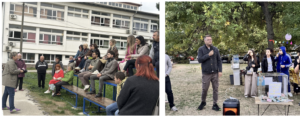
This outreach translated into strong participation in CRTA’s training program, with 1,512 people registered. By the end of year, 339 participants completed the training and 325 entered the process. To complement online learning and strengthen readiness for real-world conditions, CRTA also planned a live, election-day simulation training, designed to familiarize participants with procedures, typical irregularities and practical decision-making under pressure.
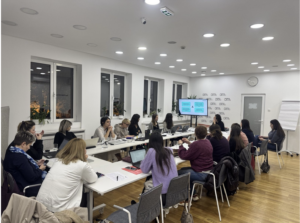
In addition, CRTA organized a series of informative and educational train-the-trainer sessions designed to build the capacity of its network of long-term observers. These sessions covered a range of thematic areas, including identifying manipulation tactics, detecting electoral irregularities and abuses, and documenting and reporting incidents in line with CRTA’s monitoring methodology. CRTA further improved its observation training, upgrading educational materials and strengthening preparation for citizens who take part in election observation missions.
In parallel, CRTA organized a series of public events and policy-oriented discussions. Two events were dedicated specifically to the voter register and its revision, providing space for expert debate and public scrutiny of proposed reforms. A policy forum on polling boards brought together electoral administrations to discuss challenges in election-day administration and possible improvements to the work and integrity of polling committees. In addition, CRTA hosted an event with representatives of the media regulatory authority of France (ARCOM), focusing on media regulation, oversight and the role of regulators in ensuring fair and pluralistic public debate during politically sensitive periods.
Civic education and stakeholder engagement
Throughout the year, CRTA placed strong emphasis on communication and public engagement campaigns as key tools for connecting research and monitoring findings with citizens’ everyday experiences and concerns.
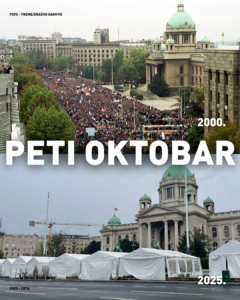
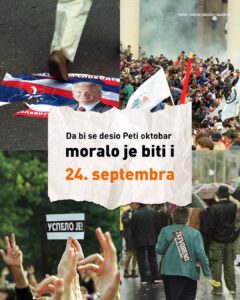
A central public campaign marked the anniversary of 5 October, using the occasion to reflect on democratic change, civic responsibility and the relevance of past democratic milestones for current political developments. Through coordinated communication activities, CRTA aimed to revive public debate on democratic values and the role of citizens in defending them.
A major communication initiative was the launch and continued production of “Izbori, itd.”, a program dedicated to unpacking the political reality in Serbia at a time when snap elections were not formally announced, yet the political atmosphere increasingly resembled a permanent pre-election campaign. Drawing on CRTA’s long-term monitoring of “elections before elections”, the show presented an informative collage of key developments, helping audiences navigate an overload of often contradictory, confusing and manipulative information.
The program connected electoral processes to everyday life, showing how politics unfolds not only in institutions and newsrooms, but also on the streets, on social media, in schools, markets and family conversations. Through analysis, research, media monitoring and personal stories, “Izbori, itd.” offered a citizen-centered perspective on elections and political choice.

Through these campaigns and outreach activities, CRTA continued to translate complex political and electoral issues into accessible formats, fostering informed public discussion and encouraging active civic engagement.
Civic education and stakeholder engagement
In 2025, CRTA, Istinomer and Open Parliament were mentioned a total of 10,486 times in the media, representing a 95% increase compared to 5,374 media mentions in 2024.
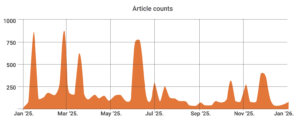
CRTA accounted for the vast majority of media coverage, with 9,291 mentions in 2025, up from 4,594 in 2024. Most of these mentions carried a neutral tone (4,813), followed by negative coverage (2,795), while positive mentions were the least frequent (1,683). Media visibility was particularly high around CRTA’s election observation missions and post-election reporting, as well as during periods of intensified public debate following the local elections in Kosjerić and Zaječar. Additional spikes in coverage were recorded in November, when CRTA monitored elections in Sečanj, Negotin and Mionica.
Istinomer recorded 1,057 media mentions in 2025, up from 651 in 2024, marking a noticeable increase. The majority of coverage was neutral (741 mentions), followed by positive (242), with negative mentions remaining low (74), indicating relatively balanced media treatment.
Open Parliament remained at a similar level of visibility, with 138 media mentions in 2025 compared to 129 in 2024. However, the sentiment shifted significantly, with negative coverage dominating (61 mentions), followed by neutral (53) and positive (24) mentions. This represents a sharp rise in negative sentiment compared to only seven negative mentions in 2024, an increase of 771%.
The surge in negative sentiment, particularly toward Open Parliament, was largely driven by coordinated attacks from pro-government media during the period surrounding the withdrawal of USAID funding. Given the relatively small overall number of media mentions related to Open Parliament, this negative campaign had a disproportionate impact on sentiment distribution. CRTA also faced heightened media attacks following the publication of election results in Kosjerić, while enjoying increased visibility ahead of the elections due to its observation missions.
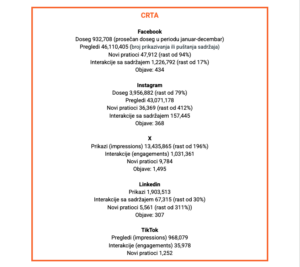
Throughout 2025, CRTA achieved strong and growing online outreach across all major social media platforms, significantly expanding the reach and engagement of its monitoring findings, legal and advocacy messages, and citizen-focused content. Increased followership and consistently high interaction levels indicate sustained public interest and trust, while the scale of impressions and views demonstrates CRTA’s ability to translate complex democratic issues into accessible formats for broad audiences.
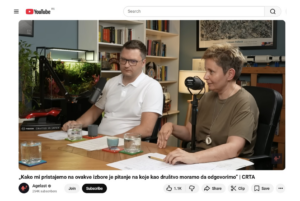
As part of its outreach efforts, CRTA’s leadership was featured on one of Serbia’s most popular podcasts – Agelast. The conversation addressed electoral integrity, democratic accountability and the broader political context in Serbia, reaching a wide audience beyond traditional policy circles. The episode attracted strong public interest, generating around 120,000 views on YouTube and approximately 1.1 million likes, further expanding CRTA’s visibility and contributing to informed public debate.
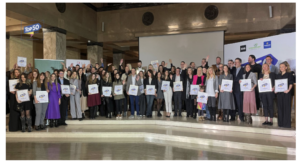
The CRTA’s website in 2025 received one of the awards awarded by PC Press to the best websites, social media pages and applications in Serbia, winning in the News and Media category. The Top 50 Award is presented by PC Press, one of Serbia’s most respected IT and technology media outlets, which has been monitoring technological trends and digital development for more than two decades. Each year, an expert jury selects the best websites, applications and online services across multiple categories, recognizing platforms that have made a significant impact on the digital landscape.
Cooperation with domestic and international partners
Cooperation with domestic and international partners remained an integral part of CRTA’s work in 2025 and intensified over the year through sustained engagement and coordination. Over the course of the year, CRTA held dozens, and likely hundreds, of meetings with civil society organizations, institutions, diplomatic missions, international organizations and expert communities in Serbia and in international settings, ensuring continuous exchange of information, alignment with democratization processes, and responses to key democratic challenges and abuses.
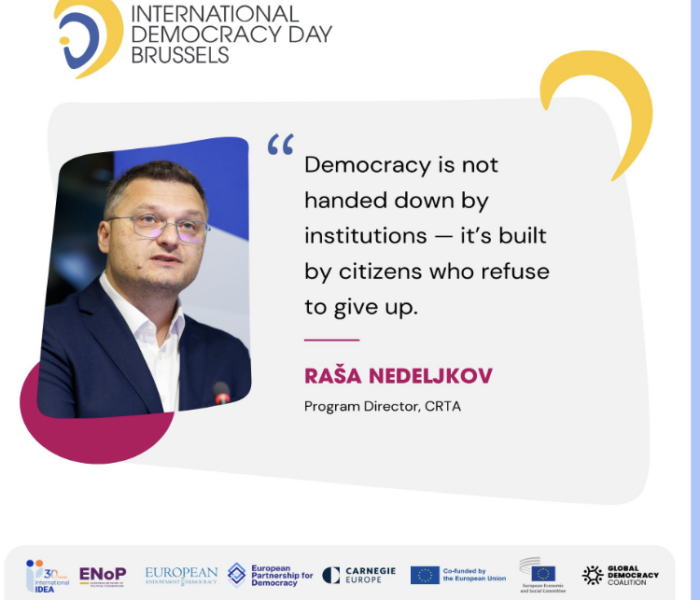
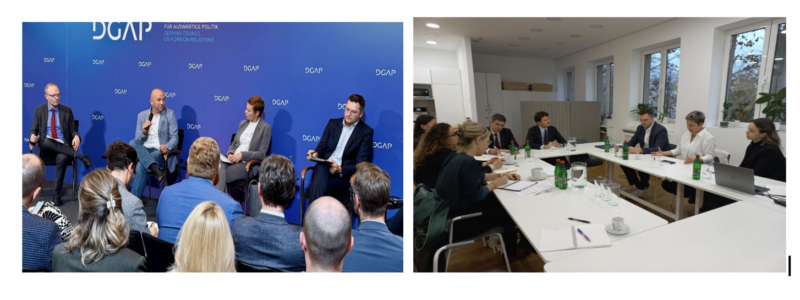
CRTA strengthened its international outreach by bringing evidence and field findings directly into high-level policy discussions. On several occasions, CRTA representatives spoke in EU institutions and at the German Bundestag, helping international decision-makers better understand developments in Serbia through first-hand insights, verified data, including field data and concrete recommendations. In parallel, CRTA’s sustained international advocacy regarding the broader deterioration of democratic standards, particularly repression of protests and the erosion of electoral integrity, helped inform and maintain international attention on these issues. This was reflected in communications by UN Special Rapporteurs, European Parliament resolution and increased scrutiny of developments in Serbia by other international actors. This engagement reinforced CRTA’s role as a trusted source of analysis and an active contributor to shaping domestic and international conversations on democratic standards, electoral integrity, media freedom and the rule of law.
EUCRTA
In 2025, CRTA launched EUCRTA, a new Brussels-based organization, envisioned as a designated platform for strengthening links between European institutions and civil society in Serbia and the Western Balkans. EUCRTA seeks to advance democracy, transparency and active civic participation by ensuring that local experiences, evidence and concerns from Serbia and other Western Balkan countries are meaningfully represented in EU-level discussions and decision-making processes.
Through EUCRTA, CRTA builds and maintains strong connections with EU institutions (like the European Parliament, European Council and the European Commission) and Brussels-based partners (think tanks, researchers, journalists, advisors), creating direct channels for dialogue and cooperation.
The initiative amplifies the voices of Serbian civil society organizations in Brussels, ensuring that perspectives from the ground, including from organizations specializing in digital rights, human rights, judicial reform and other issues relating to democratic reform, are not only visible but actively considered in policy debates. By bringing CRTA’s research findings, monitoring data and analytical insights into EU conversations, EUCRTA helps inform European policymakers with evidence-based assessments of democratic developments in Serbia.
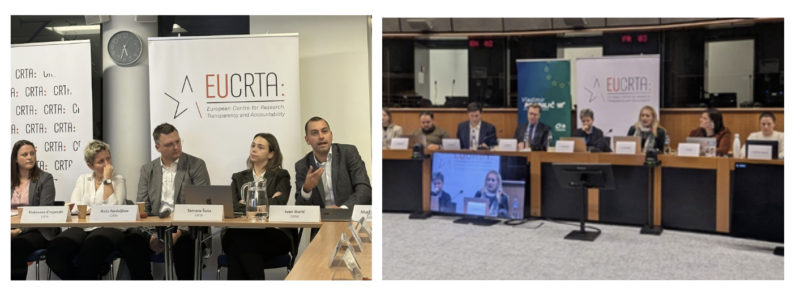
At the same time, EUCRTA works to amplify CRTA’s work through both formal and informal networks, as well as through targeted engagement with international media, policy communities and Brussels-based decisionmakers. The initiative also functions as a bridge, continually sharing insights on EU priorities, policy trends, and opportunities for input back with CRTA and its partners in Serbia. In doing so, EUCRTA contributes to building a more connected, accountable, and democratically resilient space between the EU and the Western Balkans.
Organisational development
CRTA continued to strengthen its organizational capacity with a strong focus on internal development, innovation and the integration of new technologies. Particular emphasis was placed on expanding the use of AI-based solutions across research, monitoring and analytical work, with the aim of improving efficiency, accuracy and the ability to process large volumes of data. These investments enabled stronger evidence-based advocacy and informed decision-making processes across all program areas, including research, media monitoring, financial and administrative, fieldwork and other teams.
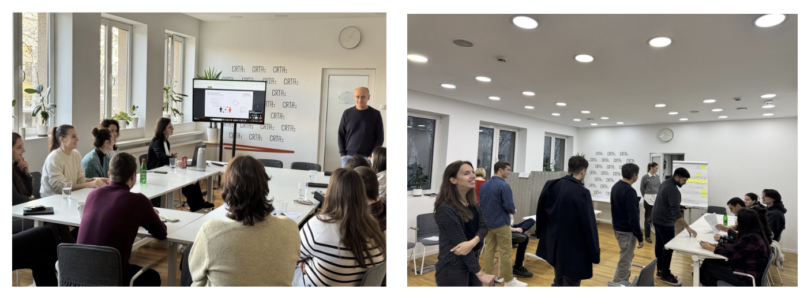
CRTA also provided space for the professional development and education of new drivers of democratization by introducing a new cycle of internships. In November, 11 interns joined the organization and participated in a range of educational workshops and training sessions, gaining hands-on experience in research, monitoring, advocacy, communications and organizational work. The internship program combines practical engagement with structured learning, contributing both to interns’ professional development and to CRTA’s long-term sustainability.

The year in numbers
Expenses and revenues
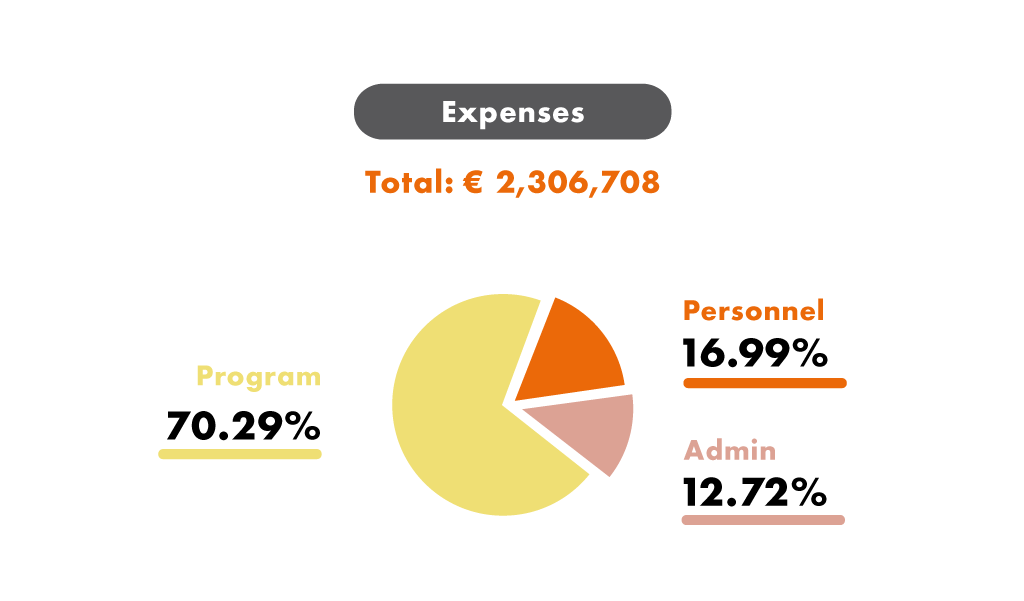
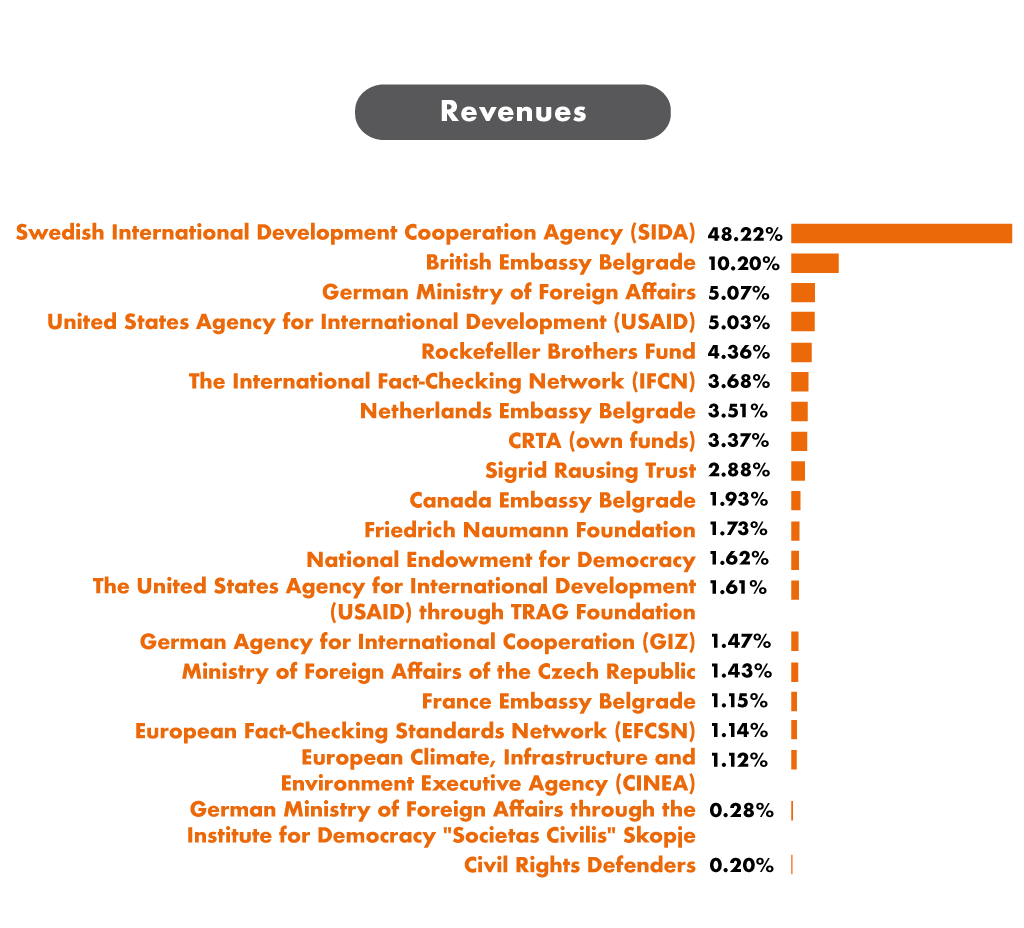
Partners
- British Embassy Belgrade
- Canada Embassy Belgrade
- Civil Rights Defenders
- Deuthsche Gesellschaft fur Internationale Zusammenarbeit (GIZ) GmbH
- European Climate, Infrastructure and – Executive Agency (CINEA)
- European Fact-Checking Standards Network (EFCSN)
- France Embassy Belgrade
- Friedrich Naumman Stiftung
- German Ministry of Foreign Affairs
- International Fact-checking Network (IFCN)
- Microsoft
- Ministry of Foreign Affairs of the Czech Republic
- National Endowment for Democracy
- Netherlands Embassy Belgrade
- Rockefeller Brothers Fund
- Sigrid Rausing Trust
- Swedish International Development Agency (SIDA)
- United States Agency for International Development (USAID)
- Institute for Democracy “Societas Civilis” (North Macedonia), through the German Ministry of Foreign Affairs
- Trag Foundation (Serbia), through the United States Agency for International Development
- Transitions Online (Czech Republic), through the Ministry of Foreign Affairs of the Czech Republic